
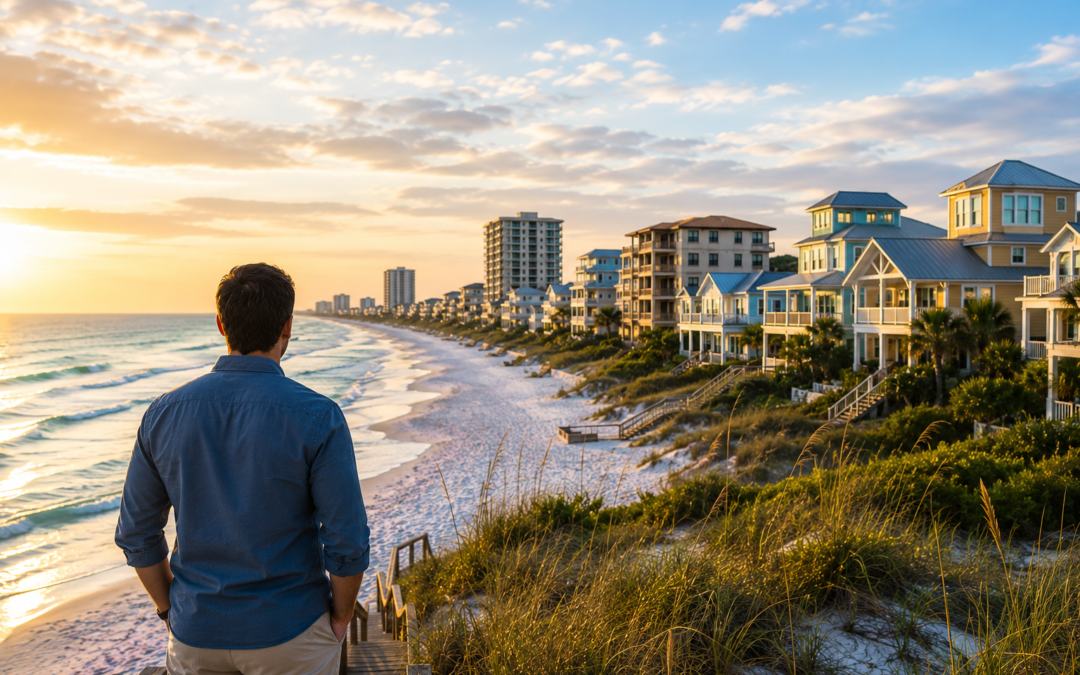
One of the questions I think about most as both a Realtor and a vacation rental owner is this: Will people still want to own beach property in 10 or 20 years from now?
And just as importantly… Will they still want to vacation here?
Because if the answer is yes, owners who hold quality beach real estate could be positioned extremely well.
Before We Dive In…
Not every property is positioned equally for the next decade. Some are built to benefit from the coming trends. Others… they are going to struggle. Want to know where your property stands on:
- ✓ Rental Demand
- ✓ Buyer Demand
- ✓ Competitive Position
- ✓ Long-Term SaleAbility
Get Your Complimentary SaleAbility Review
See exactly how your house or condo stacks up against the shifting 2026 market underwriting rules (Takes 60 Seconds).
The 60-Second Version
If you only read one section this week, read this:
Five Trends Shaping The Next 20 Years:
- Emerald Coast supply remains extremely limited.
- Insurance conditions are actively improving.
- $84 trillion is changing hands right now.
- Large homes are heavily outperforming smaller properties.
- The gap between the best properties and average properties is widening.
The real question is: Will your property be one of the winners?
1. Florida’s Emerald Coast is Rare
In most parts of the country, hotel developers can simply build more rooms, and home builders can clear another field for a new subdivision. But adding more Gulf-front or Gulf-view properties here at the beach is virtually impossible. Even off-the-beach properties that have deeded or public access are going to accrue significant demand and the ability to command prices that come with it.
An Even Scarcer Resource
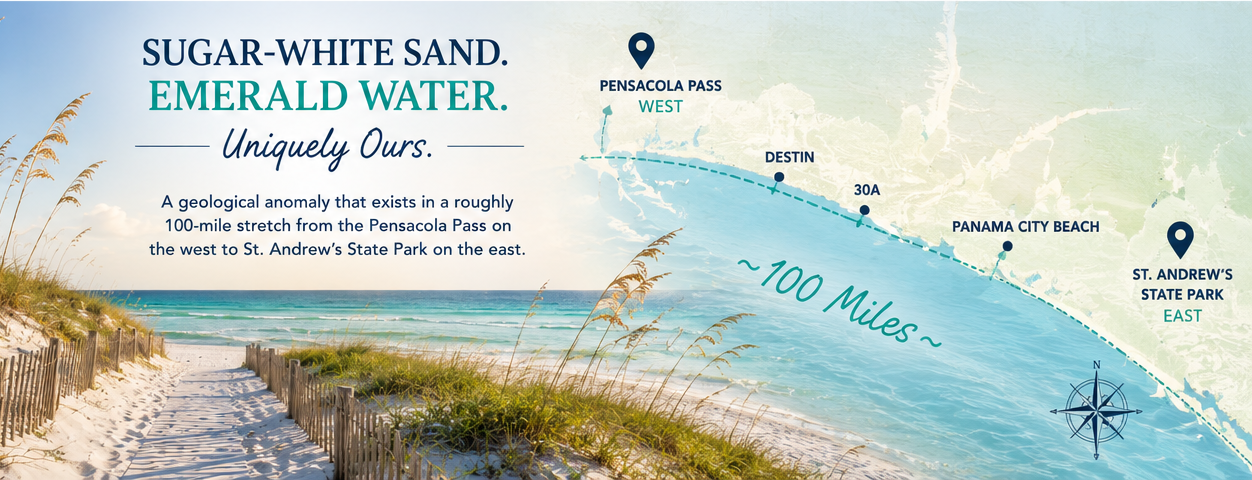
The sugar-white sand and emerald water that make our market so desirable are a geological anomaly that exists in a roughly 100-mile stretch from the Pensacola Pass on the west to St. Andrew’s State Park on the east.
With every year that passes, our existing inventory of well-positioned beach homes and condo becomes relatively scarcer while global (yes, the world is learning about our little slice of Heaven on Earth) demand grows.
Take Away? We aren’t competing against an expanding supply base—no, no, no. We are sitting on top of a strictly finite one.
2. Better Insurance Prices
For the past few years, the talk around coastal real estate has been dominated by the high cost of insurance. Some even call it a crisis. Skyrocketing premiums and carriers running from coastal states put many investors in a position of wondering if the math would still work on their properties.
But as we cross into 2026, the data shows the market is finally turning a corner.
- The Return of Competition: Property insurance tort reforms passed in recent years have successfully crushed frivolous lawsuits and fraudulent claims. Because the legal environment is finally predictable again, capital is flooding back into the market. Nearly 20 new private carriers have entered the coastal market, bringing over $850 million in new capital.
- Rate Easing: For the first time in a decade, premiums are flattening. In fact, some private carriers are filing for rate decreases, and the state-backed insurer of last resort, Citizens, has seen its policy count dramatically shrink as private insurers actively absorb those properties.
Pay Attention to This
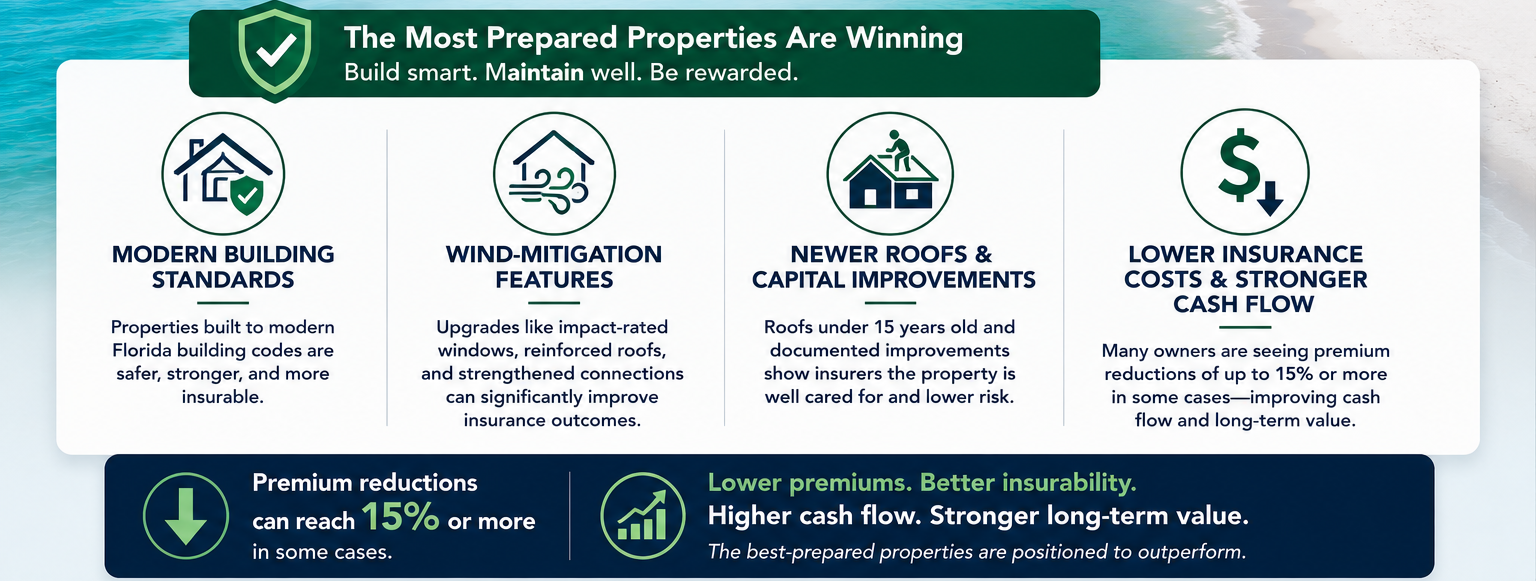
Properties built under modern building codes or those with documented capital upgrades (like wind-mitigation features or roofs under 15 years old) are seeing premium reductions of up to 15%. On the other hand, older properties that haven’t maintained their structural or financial situation are facing a substantial “insurance tax.”
This means the future belongs to the professional, proactive property managers who use proper ongoing maintenance to harden their assets.

The Great Wealth Transfer
Right now, the Baby Boomer generation (folks aged 62 to 80) represents roughly 67 million Americans. They are sitting on the largest nest egg in history, and we are just now beginning the early stages of the “Great Wealth Transfer”. Over the next twenty years, they are projected to pass down approximately $84 trillion to their heirs.
The Impact?
- Buyers: As Millennials (folks born between 1982 and 1996) reach their late 40s and 50s over the next decade, that inherited capital will directly fuel their own second-home and vacation-property purchases. The good news? The desire for a coastal getaway isn’t dying; the bank accounts to buy them are just changing hands.
- Rentals: On the flip side, a massive chunk of those inheritance dollars will go straight toward travel. Pay attention to this: Millennials consistently prioritize “experiences over things.” They travel in large groups, favor multi-generational family trips, and prefer large beach houses or grouped condos over cold, corporate hotel rooms.
The Takeaway: You aren’t just selling “bed space” anymore; you are selling the infrastructure for family memories. As long as your properties are configured to host these groups comfortably (with large dining tables, open gathering spaces, and fast Wi-Fi for remote-workers), you are a bullseye for the strongest demand cohort in the hospitality industry.

4. The Luxury and Large Property Premium
The data is already showing a clear divergence in property performance. I’m seeing it in my own properties right now. The rental market is splitting: Average Daily Rates (ADR) for luxury-tier and larger multi-bedroom properties grew by over 5% year-over-year, while smaller budget-level properties saw rates flatten or even decline (-0.3%).
Why the split? Large beach houses naturally appeal to the larger, multi-generational or friend groups driving the market. For example: If a house costs $800 a night but easily sleeps 12+ people, the per-person, per-night cost is only $66. “Grouping up” allows guests to pool their money, making high-end properties highly resilient to inflation.
If you own houses (sleep 12-20 people), your pricing power is relatively safe because groups split the bill.
Be Careful
If you’re looking to deploy capital into a high-margin asset that resists inflation, navigating the tight inventory of 5+ bedroom homes requires a specialized approach
The 5+ Bedroom Off-Market Watch List
Access my private, curated tracker of high-capacity assets configured for group wealth generation.
Get On The 5+ Bedroom Off-Market Watch List →

5. De-Commoditize Your Condo & Protect Your SaleAbility
If you own a condo, you cannot win a race to the bottom on price because someone else will always be willing to lose money faster than you. Instead, your goal over the next decade must be to pull your property out of the “commodity bucket” and drag it into the premium category.
- Stop Selling “Heads in Beds Space,” Start Selling an Experience: An amateur host puts a bed in a room and lists it. A professional host designs a vibe. We do it with our properties and we capture $80k from 1-bedroom condos, $110k from a 2-bedroom condo, and we are targeting $200k from our new house.
- The Design Moat: Spend the money to update your interiors with high-end, photogenic design—think distinct accent walls, custom lighting, high-quality linen, and local art. When a potential guest is scrolling through a sea of boring, beige condos, a striking interior design is what stops the scroll.
Case Study: See Our Key Lime Cottage
- The Power of Bundled Units: : You can capture larger groups (multi-generational family trips or friends traveling together), if you own 2 or more condos next to (or near – same floor) each other. This creates flexibility to rent one unit (small group) or tie 2 or more together for larger group.
The New Rules of “SaleAbility”
If you own a 1-to-3-bedroom condo right now, your asset’s SaleAbility—how attractive, valuable, and easily financeable it is to the next buyer—is shifting dramatically.
Buyers today aren’t just shopping your view of the Gulf, their mortgage lenders are strictly auditing your condo association’s structural integrity reserve studies (SIRS) and master insurance policies. If a building has deferred maintenance or underfunded reserves, its baseline SaleAbility drops, forcing future sellers to slash prices or accept cash-only buyers. Maximizing your property’s yield today directly protects its liquidity and exit value tomorrow.
Is your property optimized for the 2026 shifts?
Let’s run an honest assessment of your current pricing, expenses, and asset liquidity to see exactly where your unit stands.
[Request Your Free Property SaleAbility Evaluation] This needs to be a button.
6. The “Set It and Forget It” Landlord is Dead
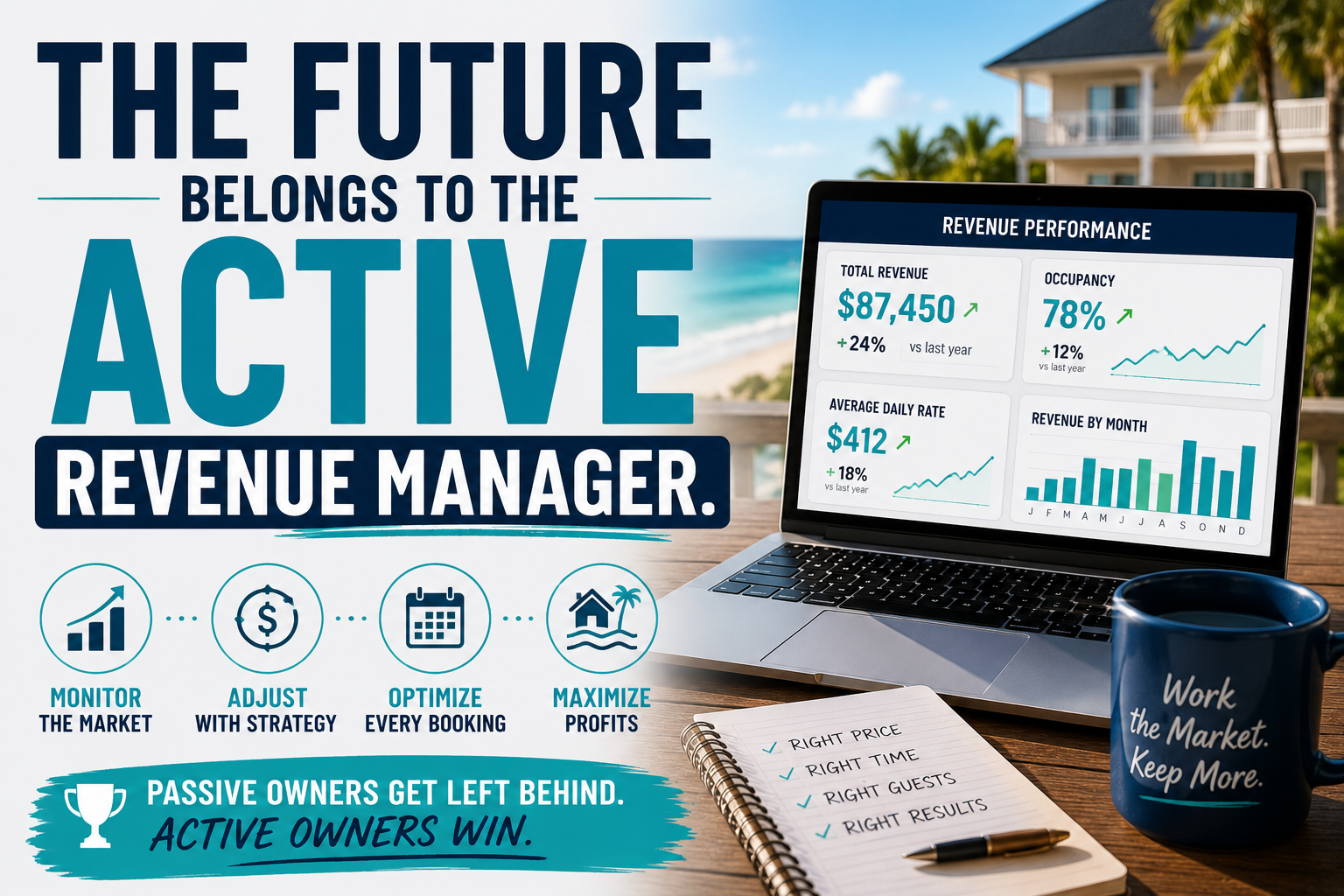
The future belongs to the active revenue manager. Data from AirDNA shows that properties managed by experienced operators using dynamic pricing software outperform amateur hosts by over 25% in revenue per available rental (RevPAR).
We are moving into an era dominated by automated, AI-driven pricing engines. The owners who can constantly tweak their parameters, adjust minimum stay requirements on the fly (like dropping a 7-night minimum to a 3-night minimum if a gap opens up last minute), and manage their costs like a hotel chain will thrive. Those operating by “feel” or just checking in every now and then are going to struggle.
The condo market over the next 10 years will need to be a strict performance business. Hands-off, amateur investors who bought during the pandemic boom are already getting squeezed by rising insurance, structural reserve laws (SIRS), and lower occupancy. Many will sell.
This is BIG
For a disciplined “operator”, this shakeout is actually a massive opportunity to capture market share. As amateur inventory clears out, owners who treat guest satisfaction like a science will capture the lion’s share of the wealth.
The Long-Term Forecast:
The financial future for real estate on Florida’s Emerald Coast is incredibly bright, but it requires a change in mindset. Large houses will act as your reliable, high-margin anchor assets.
Condos will act as your high-volume, hyper-efficient cash-flow engines—provided you run them with razor-sharp pricing discipline.
Both will act as wealth building machines as time drives their value up and renters pay the cost to own and your mortgage.
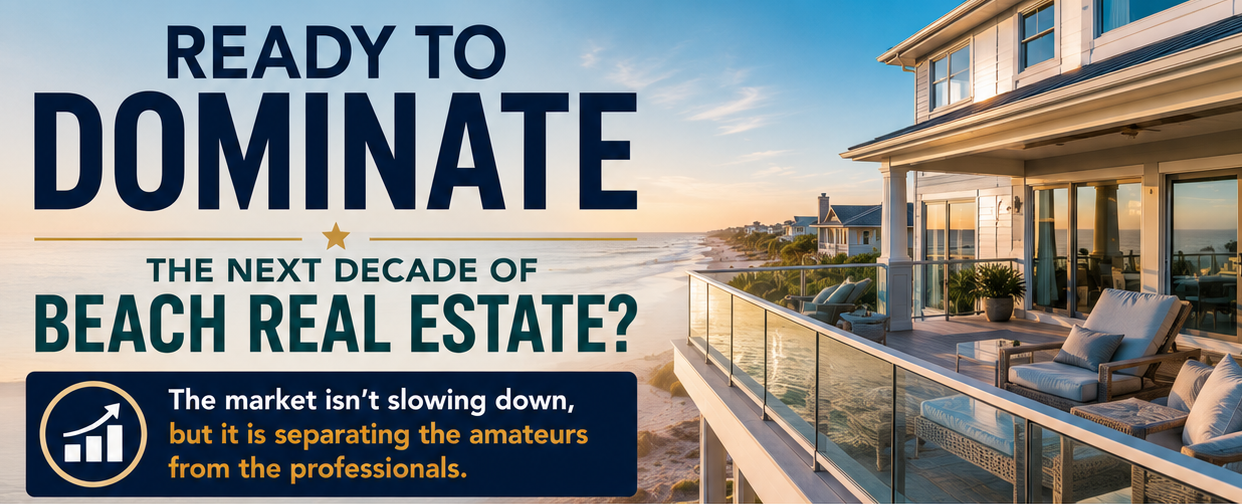
Ready to dominate the next decade of beach real estate?
The market isn’t slowing down, but it is separating the amateurs from the professionals. Whether you want to protect what you currently hold, map out an exit strategy, or expand your footprint into the highest-yielding assets, let’s look at the hard data together.
- Path A: I currently own a beach rental. Let’s run a comprehensive Property SaleAbility Evaluation on your house or condo. We will look at your dynamic pricing metrics, benchmark your asset against modern coastal underwriting standards, and review your structural exposure so you know exactly how market-ready your asset is if you choose to hold, upgrade, or cash out.
Click Here to Request Your SaleAbility Review →
- Path B: I want to acquire a beach rental. Let’s pinpoint assets with an uncopyable supply moat. I’ll send you a curated list of properties built to modern structural standards that perfectly match the high-demand demographic profiles we discussed.
Get On The 5+ Bedroom Off-Market Watch List →
P.S. Did you know that a property with a pristine wind-mitigation report can cut its insurance premiums by up to 15% right now? If you want my trusted list of local inspectors and specialized contractors who know how to harden beach properties to aggressively lower your fixed costs, just reply “HARDEN” to this email and I’ll send it right over.

Advice from the cheap seats (1280 × 720 px) – 6
Final Thoughts
Our job is to help you understand and maximize your position—whether you are buying, selling, or holding. In a market where the “safety net” has disappeared, clarity matters. We can run a SaleAbility Review that shows:
- Your Competitive Position: Are you in the “Top 10%” or the “Stuck” category?
- Your Real Buyer: Who they are and what they are actually paying for in today’s climate.
- The Exit Window: Whether the current 12% surge in volume is your window to exit or an opportunity to scale.
Clarity first. Decisions second.
You can also reach our team directly at 850-654-3325, or simply click the link below to schedule a time.
Committed to your success,
John Moran – CEO
The Smart Beach Investor | Keller Williams Realty At The Beach Team